" height="26.80529977783203px" id="tymKb8bqC" width="128.00300311279295px"/><path d="M 0 2.417 L 0 0 L 12.909 0 L 12.909 2.417 Z" fill="rgb(126, 78, 253)" height="2.417099999999998px" id="aYr4em6zK" transform="translate(128.341 22.325)" width="12.908999999999992px"/></svg>)

"/><stop offset="1" stop-color="rgb(118, 37, 250)"/></linearGradient></defs><g d="M 19.242 21.22 L 19.362 6.204 L 19.272 6.204 L 13.757 21.22 L 10.161 21.22 L 4.796 6.204 L 4.706 6.204 L 4.825 21.22 L 0 21.22 L 0 0 L 7.283 0 L 12.109 13.607 L 12.229 13.607 L 16.844 0 L 24.247 0 L 24.247 21.22 Z M 26.421 26.113 L 26.421 23.445 L 41.407 23.445 L 41.407 26.113 Z" fill="transparent" height="26.112508199679183px" id="DvfaAIHYn" width="41.40731898311435px"><path d="M 19.242 21.22 L 19.362 6.204 L 19.272 6.204 L 13.757 21.22 L 10.161 21.22 L 4.796 6.204 L 4.706 6.204 L 4.825 21.22 L 0 21.22 L 0 0 L 7.283 0 L 12.109 13.607 L 12.229 13.607 L 16.844 0 L 24.247 0 L 24.247 21.22 Z" fill="rgb(46, 46, 46)" height="21.220180016149442px" id="pLsxRCobd" width="24.247352589074694px"/><path d="M 0 2.668 L 0 0 L 14.986 0 L 14.986 2.668 Z" fill="url(%23yD9d4I5GR-3279285344-linear-gradient)" height="2.6675085048549647px" id="yD9d4I5GR" transform="translate(26.421 23.445)" width="14.986002836263765px"/></g></svg>)

Yasmina Akni Ebourki
LinkedIn has evolved far beyond job searching. With over 1.3 billion members worldwide and 310 million monthly active users, it’s now the world’s largest professional network and one of the most direct paths to generating real income online.
But the platform rewards strategy over luck. Whether you offer a service, sell a product, or build an audience, understanding how to make money on LinkedIn in 2026 is your first step towards turning your presence into revenue.
Short Answer: Yes, you can make money on LinkedIn. The most reliable methods include selling services or consulting, affiliate marketing, sponsored content, digital products, and LinkedIn newsletters.
You don’t need a large following to start. Clear positioning, consistent content, and targeted outreach can generate your first clients with fewer than 500 connections.
Can You Make Money on LinkedIn?
Yes, and the opportunity is growing. LinkedIn generated $17.81 billion in revenue in fiscal year 2025 and crossed a $20 billion annual run rate in Q4 2025.
That growth is driven by an increasingly engaged user base: engagement rates on the platform continue rising, reaching an average of 5.20% across content formats in 2026, with top formats reaching up to 7%.
That level of engagement means your content, outreach, and offers reach real decision-makers.
📊 LinkedIn reports that 63 million decision-makers use the platform, making it suited for B2B sales, consulting, and professional service businesses.
What Does the LinkedIn Algorithm Prioritize in 2026?
Before monetizing, you need your content to reach people. The 2026 algorithm has shifted significantly from earlier years. Here’s what matters most:
Dwell time, saves, and shares now outweigh likes as ranking signals.
Posts stay in feeds for 2 to 3 weeks, not just 24 hours like in previous years.
Carousels drive the highest engagement at an average rate of 24.42%, outperforming video (6.47%) and text-only posts (approximately 4%).
LinkedIn actively suppresses automated engagement that doesn’t go through official API-verified tools.
Comments carry 15 times more weight than likes, so prioritizing replies over reactions builds reach faster.
The first 60 to 90 minutes after posting are critical. Engaging actively in that window signals relevance to the algorithm and expands your reach significantly.
12 Ways to Make Money on LinkedIn in 2026
Here are twelve proven tactics for making money on LinkedIn in 2026. They cover services, affiliate marketing, sponsorships, digital products, and more.
1. Selling a Service
This is the most direct and scalable method available on LinkedIn, especially for coaches, consultants, designers, and marketers who already have defined offers.
The goal is to position your expertise so that the right people come to you. Your LinkedIn profile acts as a landing page, and your content builds the trust that makes prospects comfortable reaching out.
What makes this work in 2026 is the following:
A specific, outcome-focused offer (not "I help businesses grow" but "I help SaaS founders add 3 qualified calls per week through LinkedIn content").
A profile optimized with a strong headline, a results-driven “About” section, and a banner with a clear call to action.
Three to five posts already live on your profile before you start outreach, so visitors see proof before they reply.
Outreach that references something specific about the prospect, rather than a generic pitch.
You don’t need thousands of followers to land your first client. Clear positioning and a smart outreach strategy are enough to start generating revenue from LinkedIn directly.
2. Selling Digital or Physical Products
LinkedIn is an effective channel for product-based businesses when the approach is educational rather than promotional.
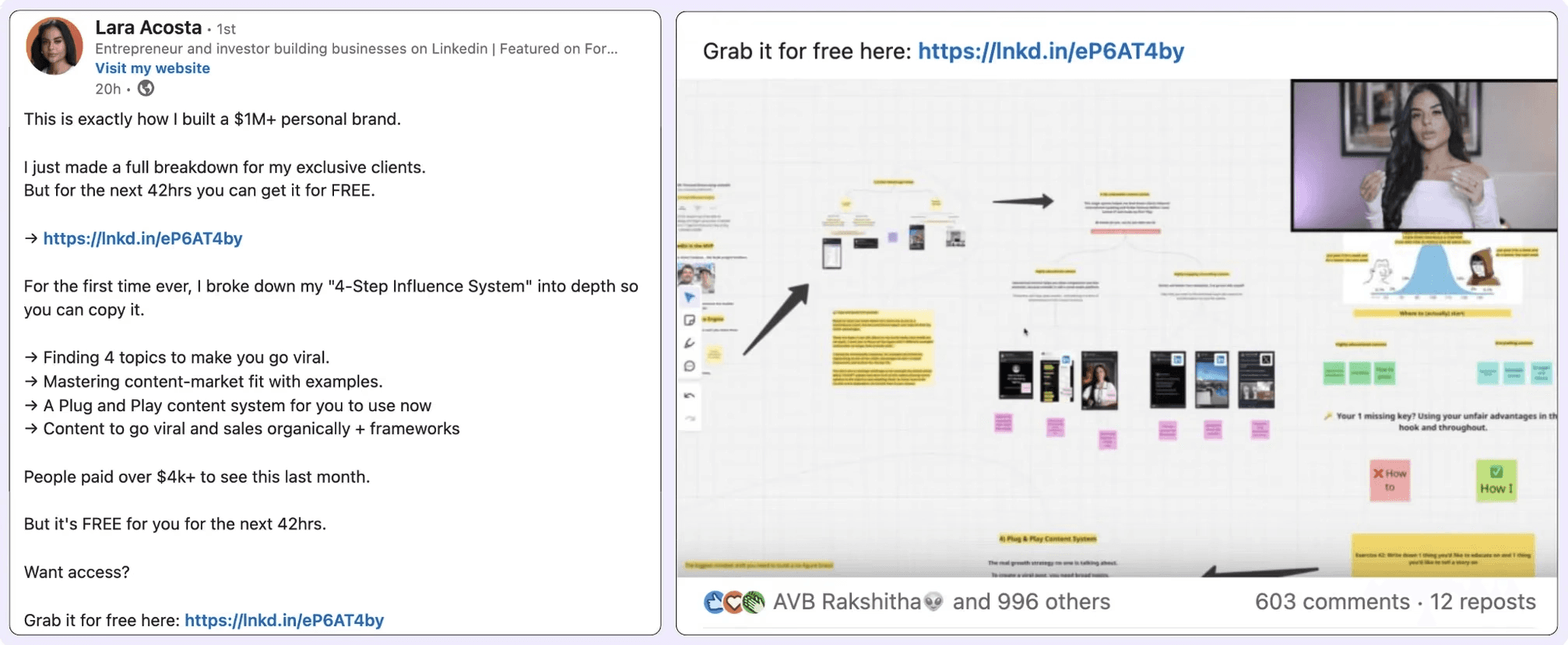
Posts that demonstrate how your product solves a real problem, show customer outcomes, or tell the story behind what you built consistently outperform posts that read like ads.
Instead of "Buy my productivity planner," try "Here’s how I structured my week to review 40 pieces of content in under two hours. I turned this system into a planner for founders who feel overwhelmed."
That framing builds curiosity, credibility, and purchase intent at the same time.
3. Affiliate Marketing
Affiliate marketing works on LinkedIn when you lead with insight rather than links. Recommending tools you actually use, in the context of problems your audience faces, earns far more trust and clicks than a promotional post.
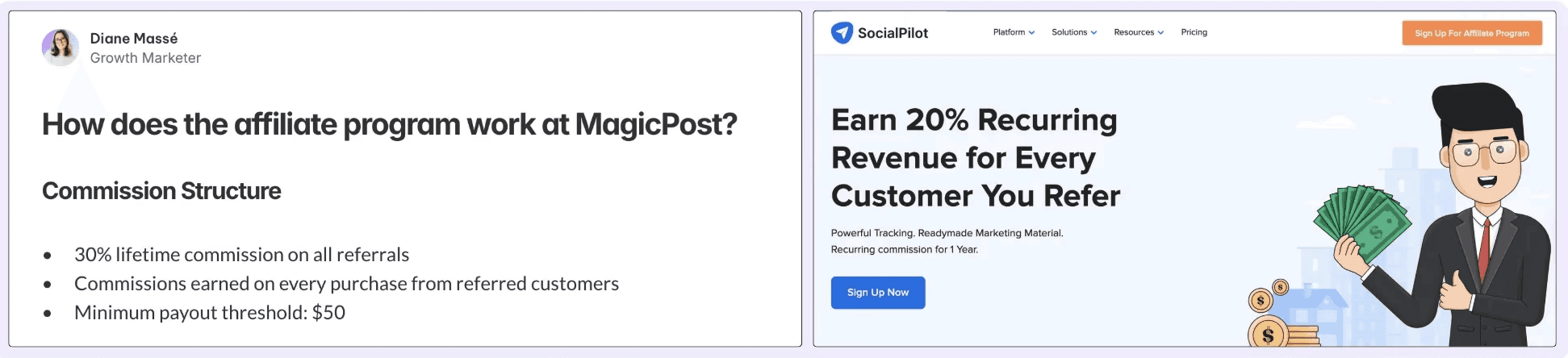
How to make affiliate marketing work here:
Choose products tightly aligned with your niche and audience, tools you’ve used yourself.
Share personal use cases, comparisons, or results that naturally reference the product.
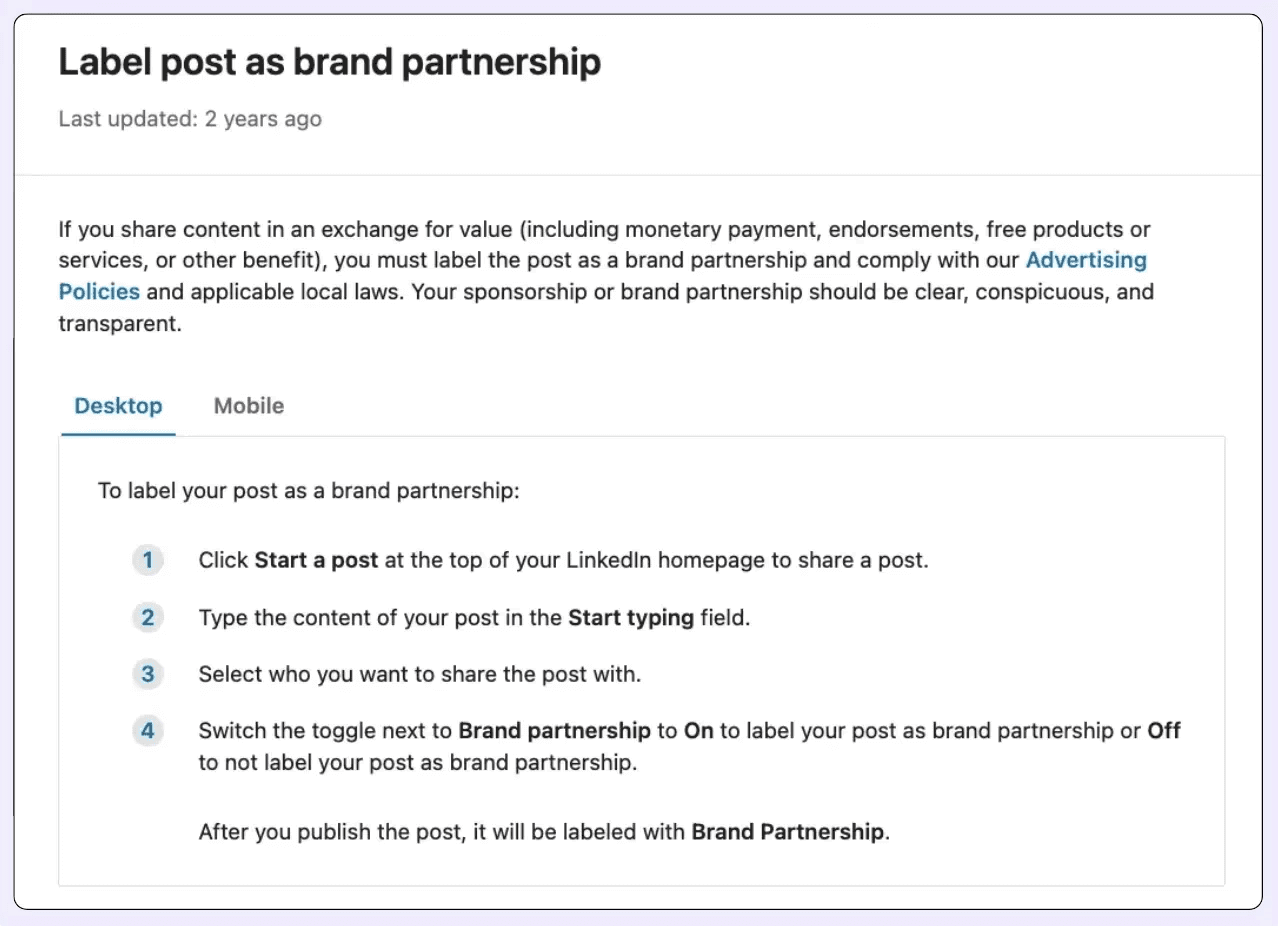
Be transparent about earning a commission; it builds trust rather than eroding it.
Place affiliate links in the comments or in linked resources rather than the body of your post, which the algorithm treats more favorably.
Affiliate income builds slowly but can become a meaningful passive revenue stream with consistency. The key is to treat it as a content strategy, not a sales strategy.
4. Sponsored Posts and Brand Collaborations
Brands pay LinkedIn creators for sponsored posts when those creators have an engaged, niche-relevant audience. You don’t need a massive following; what matters is relevance and trust.
A creator with 8,000 engaged followers in the cybersecurity space is more valuable to a B2B security tool than a generalist with 80,000 connections.
How to attract brand deals:
Build a simple media kit with your follower count, post views, engagement rate, and audience breakdown by industry and seniority.
Tag brands in relevant posts to get noticed organically before making an approach.
Reach out directly to founders or marketing leads with a clear pitch that connects your audience to their ideal customer.
Propose specific content ideas upfront, such as a product review, a before-and-after case study, or a tutorial post.
LinkedIn's BrandLink program, launched in May 2025, has also formalized a revenue-sharing model between the platform and select B2B video creators, placing ads in the pre-roll of creator videos alongside premium publishers.
As this program expands, expect direct monetization through LinkedIn’s own infrastructure to become more accessible.
5. Building an Email List from LinkedIn Followers
LinkedIn is excellent for growing an audience, but the real monetization often happens off-platform through your email list. Email gives you direct, algorithm-free access to people who have already expressed interest in what you do.
The workflow is straightforward:
Create a lead magnet (a guide, checklist, template, or short course) that solves one specific problem your LinkedIn audience faces.
Promote it through posts and direct messages, with the link either in comments or in a linked article.
Nurture your list with genuinely useful content, then make offers for your products or services when the timing is right.
Email converts at a higher rate than most social platforms because subscribers have taken an active step to hear from you. LinkedIn is the top of that funnel.
6. Hosting Paid Webinars and Workshops
If you already have an audience on LinkedIn, you have a built-in pool of potential attendees. Webinars let you deliver concentrated value in a format that naturally leads to higher-ticket offers.
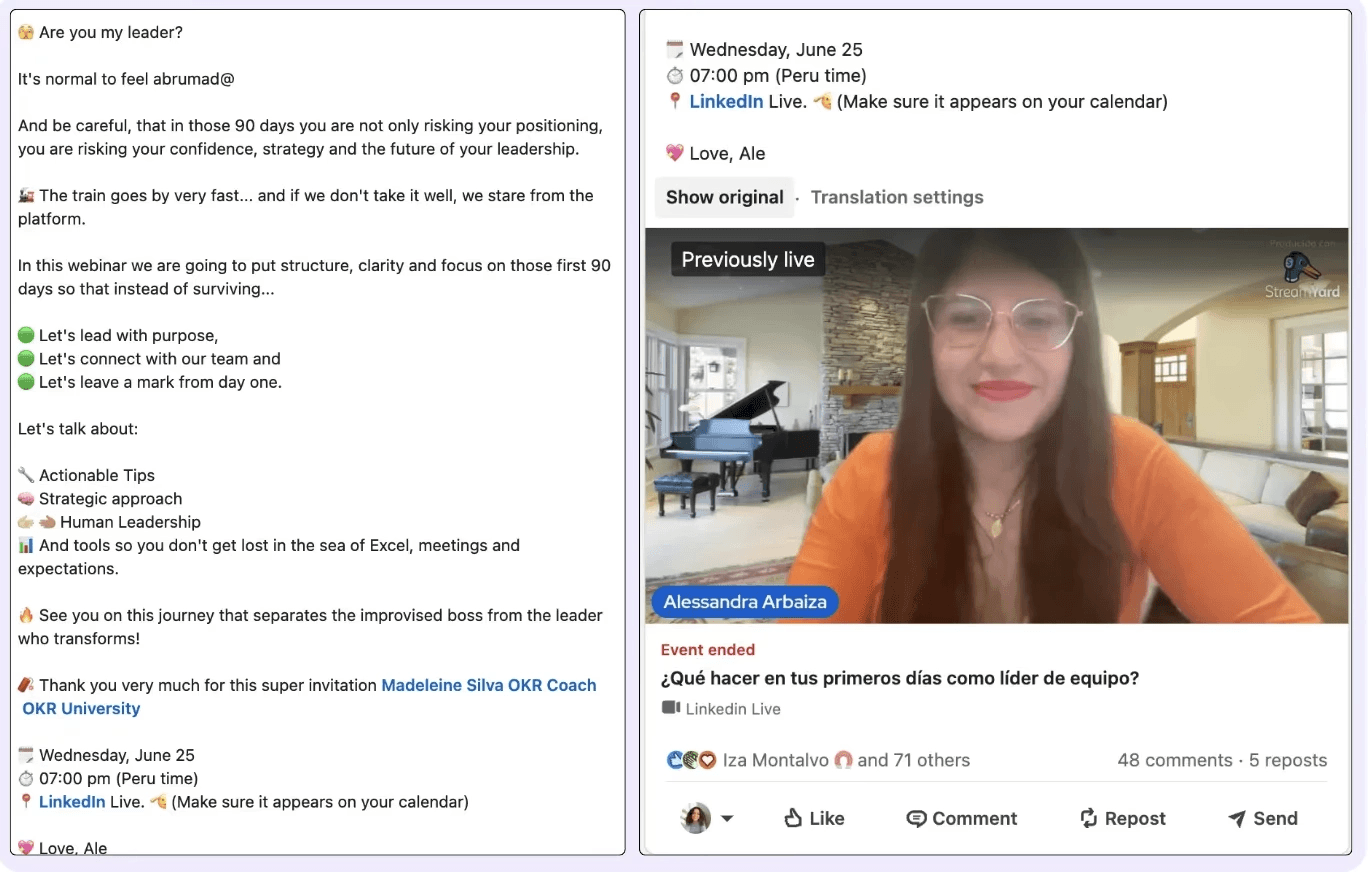
Here’s how to monetize webinars through LinkedIn:
Promote a high-value session on a specific, outcome-focused topic. Not "LinkedIn tips" but "How to book 5 qualified calls a week from LinkedIn without paid ads.”
Charge for access using Eventbrite, Gumroad, or a payment link in your bio.
Offer a limited-time replay or bonus materials to increase perceived value and create urgency.
Use the live session to introduce a higher-ticket offer: a coaching program, a course, or a retainer.
Repurpose the key moments from each webinar as posts and carousels to extend the reach of the content and attract attendees for your next session.
7. Offering LinkedIn Profile Audits and Optimization
LinkedIn profile optimization is one of the most in-demand services on the platform right now. Professionals, solopreneurs, and job seekers consistently underestimate how much their profile affects their inbound opportunities, and they will pay for expert help.
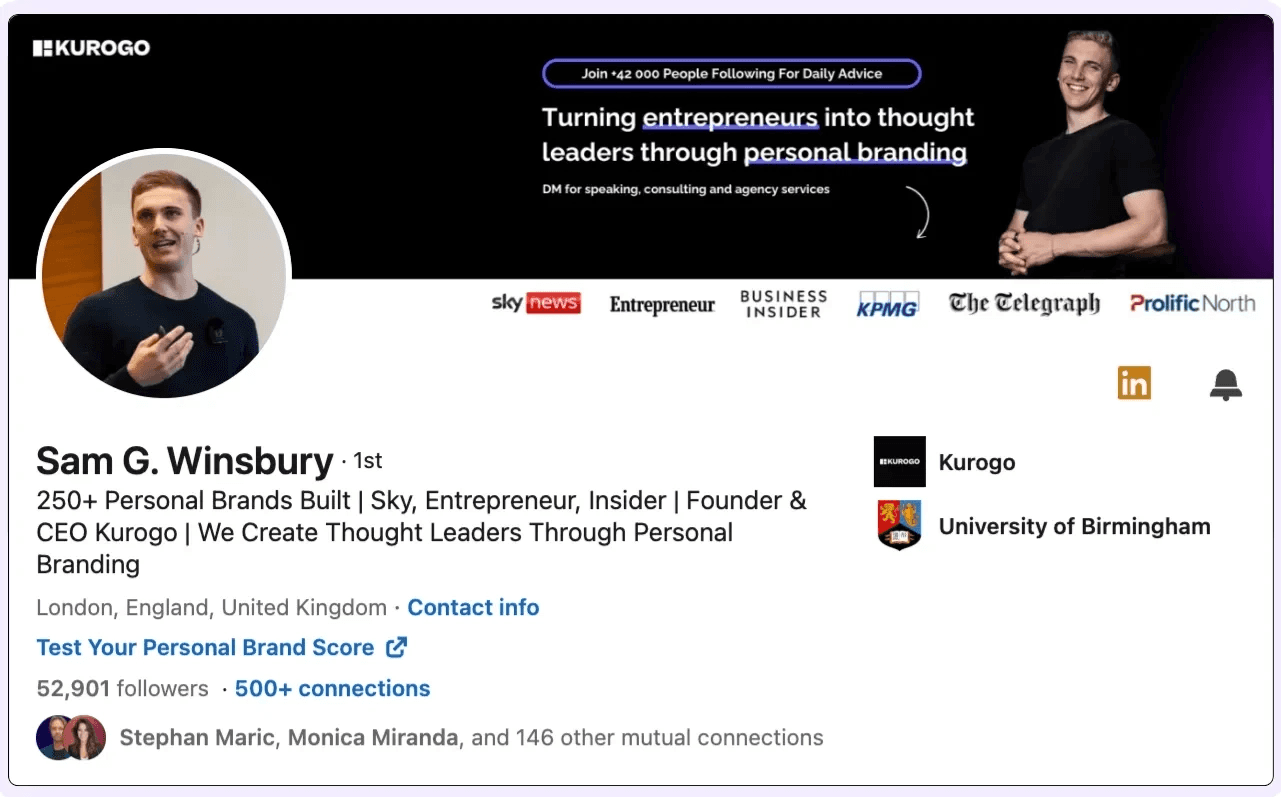
A standard profile audit might include:
Rewriting the headline to attract the right audience for a specific goal.
Overhauling the “About” section to tell a clear, compelling story.
Designing or specifying a custom banner that communicates the offer at a glance.
Reviewing featured posts, links, and recommendations for alignment with the overall positioning.
This service pairs naturally with content strategy and ghostwriting. Many clients who come for an audit end up wanting ongoing support creating and publishing content.
8. Publishing LinkedIn Newsletters
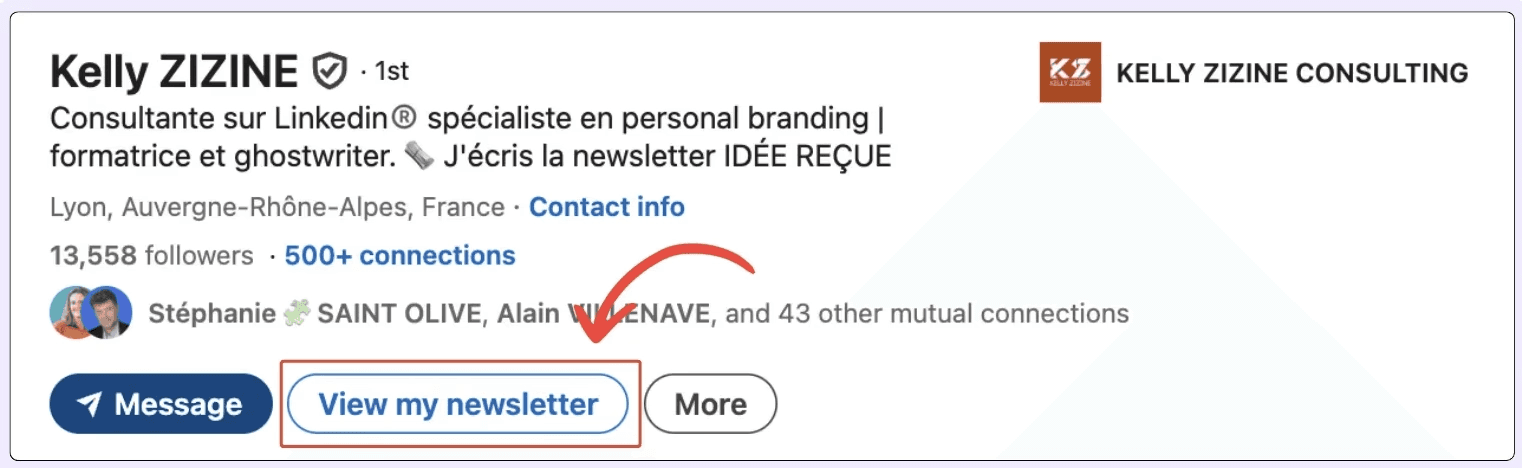
LinkedIn newsletters are a direct monetization tool that the platform largely handles for you. Every time you publish, subscribers are notified both inside LinkedIn and via email. That double exposure is something external newsletter platforms can’t replicate without additional effort.
Here’s how to build and monetize a LinkedIn newsletter:
Pick a niche topic specific enough to attract a defined audience. Not “marketing tips" but "B2B content strategy for founders under 500 followers.”
Publish consistently, starting at once or twice per month, before increasing frequency as your subscriber base grows.
Once you have a reliable readership, introduce paid tiers with deeper-dive content such as case studies, templates, and exclusive interviews.
Bundle newsletter access with a private community, a Q&A session, or a coaching program.
Top LinkedIn newsletters in 2025 have exceeded 500,000 subscribers. Even at a fraction of that scale, a focused newsletter can become a meaningful source of recurring revenue.
9. Creating and Selling Digital Templates or Resources
Content creators and busy professionals consistently need plug-and-play tools that save them time. Templates, swipe files, and content systems fill that gap and sell well at accessible price points.
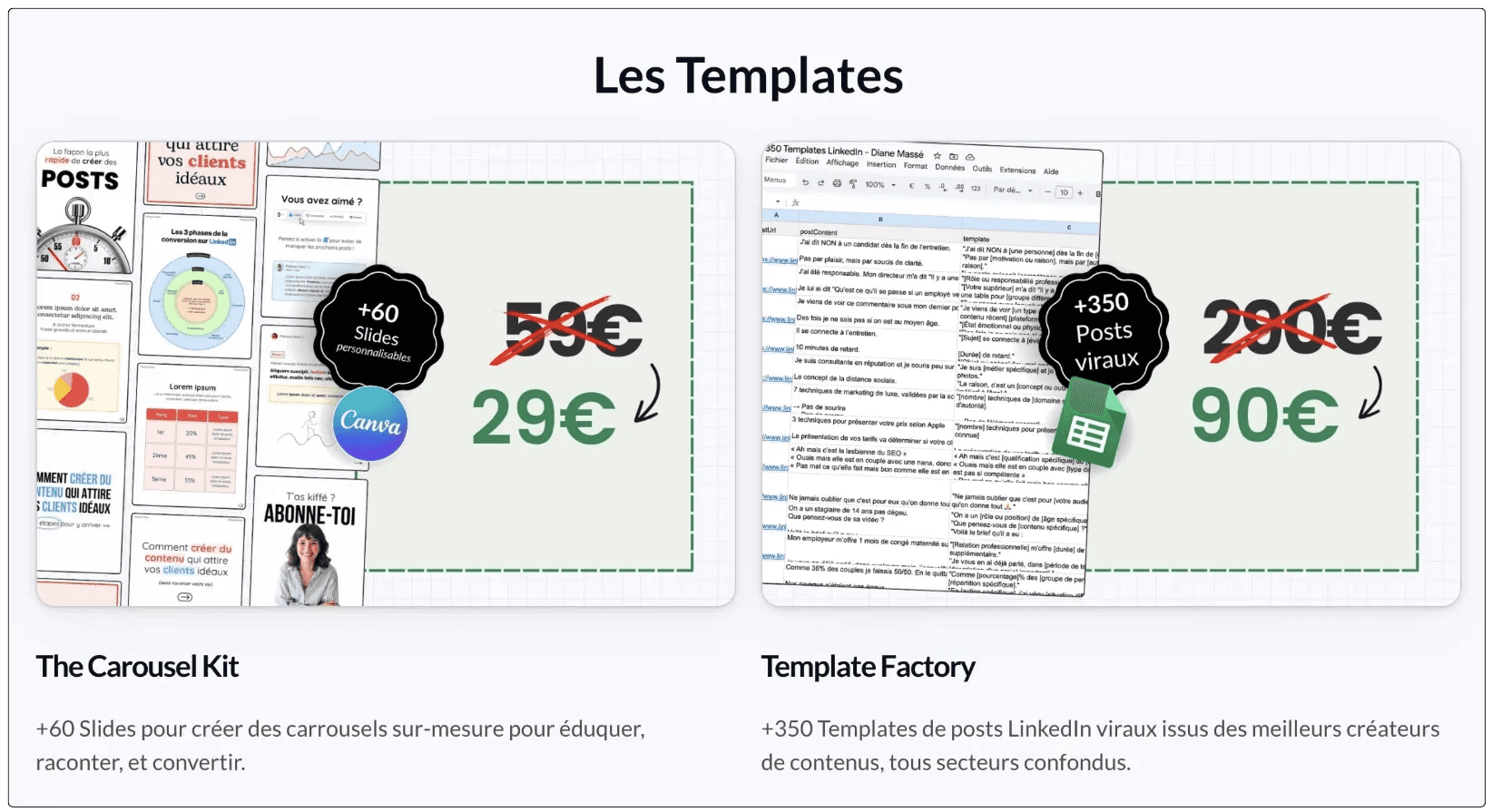
Popular digital products for LinkedIn audiences include:
30-day LinkedIn content calendars with post prompts by format and goal.
Fill-in-the-blank post frameworks for high-performing formats like lists, stories, and opinion pieces.
Personal branding starter kits with profile copy, headline formulas, and visual guidelines.
Swipe files for hooks and headlines.
Start with a price point between $9 and $49 to lower the barrier for first-time buyers. Once they see the value, upselling them into higher-ticket services (a profile audit, a coaching call, or a course) becomes straightforward.
10. Leveraging LinkedIn Groups to Build a Paid Community
LinkedIn Groups remain an underused but powerful way to aggregate a niche audience around a shared interest or challenge. Once the group is established and engaged, it becomes a platform for paid membership tiers, exclusive content, and expert access.
The model works in layers:
Start with a free group around a specific niche: B2B founders, female sales leaders, or early-stage SaaS operators.
Build engagement through weekly prompts, featured member spotlights, and expert posts.
Introduce a paid tier with exclusive content, live Q&As, or mastermind access, managed externally through a payment platform.
LinkedIn doesn’t yet offer native payment for Groups, but this is a widely anticipated feature given the platform's expansion into creator monetization. Managing payments through Stripe or Gumroad while keeping the community in LinkedIn works reliably in the interim.
11. Direct Outreach and Prospecting
LinkedIn outreach turns your profile into a prospecting machine. The model is straightforward: define who you want to work with, find them using LinkedIn's search tools, and contact them with a message that speaks directly to a problem they’re facing.
What separates effective outreach from noise is the following:
Messages that reference something specific about the recipient: a post they wrote, a role change, or a shared connection.
One concrete outcome offered, not a list of services.
An easy next step, such as a 15-minute call, a short loom video, or a free audit, rather than a hard pitch
Tools that make outreach more effective:
LinkedIn Sales Navigator for precise targeting, saved lead lists, and account monitoring.
Lemlist for multichannel sequences combining connection requests, DMs, and email.
io for verified contact data alongside LinkedIn prospecting.
Track replies, booked calls, and closed deals to identify which messages, segments, and offers actually convert. Double down on what works.
12. BrandLink: LinkedIn's creator revenue programme
LinkedIn launched BrandLink in May 2025, marking the platform's first direct creator payment system. It places advertiser pre-roll video ads alongside content from select creators, with LinkedIn sharing a portion of that ad revenue with them.
Participation is currently limited to an initial cohort of 30 B2B-focused creators (names like Steven Bartlett, Gary Vaynerchuk, and Guy Raz), but the program is expected to expand as LinkedIn doubles down on the creator economy.
What BrandLink proves is that video is becoming LinkedIn's priority format. Building a video presence now, even before BrandLink is accessible to most creators, positions you well for when it opens further.
Why Building a LinkedIn Community Makes Every Method Easier
Every approach above benefits from having an existing audience. When people already know and trust you, selling a service, launching a product, or running a webinar requires far less convincing.
That said, you don’t need 10,000 followers to start. A targeted list of 500 relevant connections, combined with a clear offer, is enough to generate your first clients. The community amplifies what you’re already doing; it doesn’t replace the fundamentals.
The fastest path to an engaged audience on LinkedIn in 2026 is the following:
Post three to five times per week with content that solves specific problems for a defined audience.
Reply to every comment within the first hour of posting.
Comment daily on posts from others in your niche.
Add 10 to 20 targeted connections per week, people who match your ideal client or collaborator profile.
What Are the Most Common Mistakes When Monetizing LinkedIn?
Absolutely avoid these mistakes while in the process of monetizing your LinkedIn presence.
Mistake | What to do instead |
|---|---|
Leading with a sales pitch in DMs | Start with curiosity or a relevant observation. Build a short conversation before mentioning your offer. |
Sending outreach with no content on your profile | Have at least three solid posts live before any outreach. Your profile is your credibility. |
Running the same strategy without tracking results | Test post formats, message hooks, and offer types. Track replies, meetings, and closed deals. |
Waiting for followers before making offers | You can sell from day one with a clear message and a defined audience. Followers scale what works, they do not create it. |
Final Thoughts
Monetizing LinkedIn comes down to three things: a clear offer, consistent content, and genuine relationships. However, none of these matter without a system behind them.
That’s where MagicPost comes in. If you’re ready to stop improvising your LinkedIn content and start publishing with a real strategy, MagicPost helps teams and individuals create, schedule, publish, and analyze content that actually drives result.
MagicPost takes the content side off your plate so you can focus on the part that actually makes money. Try it for free today; no credit card is required.
FAQ
Can LinkedIn pay you directly?
No, LinkedIn doesn’t have a built-in payment system for most creators. If you’re in the BrandLink program, LinkedIn does share ad revenue directly. For everyone else, monetization happens through external tools: Stripe, PayPal, Gumroad, or Lemon Squeezy. LinkedIn is where you generate the lead or audience. The transaction happens elsewhere.
How many followers do you need to make money on LinkedIn?
There’s no minimum. Plenty of professionals close their first client with under 500 connections by combining a clear offer with targeted outreach.
That said, a network of 500 to 2,000 engaged followers makes content-led monetization significantly easier because your posts reach more people without requiring active outreach every time.
What is the fastest way to start making money on LinkedIn?
For most people, the fastest path is selling a service directly. Define your offer clearly, optimize your profile, post two to three pieces of content that demonstrate your expertise, then send 10 to 20 targeted connection requests per week with a short, personalized message.
At that volume, the first conversations usually start within two to three weeks.
How can I quickly increase followers on LinkedIn?
Here's what works (and still keeps your profile professional):
Post valuable content 3–5x per week
Engage with other creators in your niche
Add people manually: past colleagues, clients, coworkers, or new leads
Make sure your profile looks clean and your headline clearly explains what you do
Respond to DMs and comments to keep the conversation going
Is LinkedIn good for affiliate marketing?
Yes, but only when the approach is insight-led rather than promotional. Posts that share genuine experiences with tools and include affiliate links in the comments perform well.
Direct promotional posts that lead with the product and link in the body of the post are suppressed by the algorithm and erode trust with your audience.
Does LinkedIn penalize outbound links in posts?
LinkedIn's algorithm does reduce the reach of posts that contain outbound links in the body of the post. The standard workaround is to post the link in the first comment and reference it in the post copy.
This keeps the post itself link-free while still directing interested readers to your resource, product page, or newsletter signup.
Social Selling on LinkedIn: Win B2B Sales with Content (2026)
Social selling on LinkedIn isn’t about sending more InMails. You need to build the presence that makes prospects reply before you ever reach out. Here’s how.
How to Get More Followers on LinkedIn in 2026
Struggling to grow on LinkedIn? Learn the exact strategies, frameworks, and posting habits that actually help you get more followers on LinkedIn in 2026.
How to Measure Content Performance on LinkedIn (2026)
Not sure how to measure content performance on LinkedIn? Learn the 3 metrics that actually matter, plus benchmarks and a simple tracking system.